H100
Pick the H100 when 80 GB (SXM or PCIe) or 94 GB (NVL) is enough. SXM memory bandwidth is 3.35 TB/s, and an official DGX H100 is 8U at 10.2 kW.
NVIDIA H100H100 vs H200
Have an H100 or an H200, or need one? Tell us which. We verify the hardware, match a Have with a Need, and handle the deal. If you're selling, you pick which offer to take.
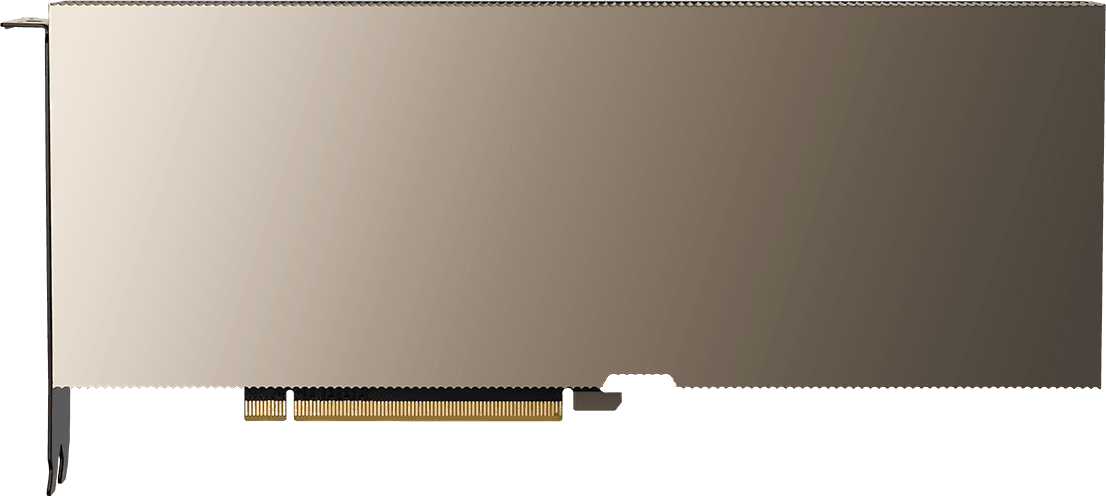
NVIDIA
H100
NVIDIA
H200
H100
Pick the H100 when 80 GB (SXM or PCIe) or 94 GB (NVL) is enough. SXM memory bandwidth is 3.35 TB/s, and an official DGX H100 is 8U at 10.2 kW.
NVIDIA H100H200
Pick the H200 when you need 141 GB of HBM3e at 4.8 TB/s and want to stay on Hopper. SXM is configurable up to 700 W. NVL is configurable up to 600 W.
NVIDIA H200Ampere
Hopper
H100 · H200
Blackwell
Blackwell Ultra
80 GB (SXM, PCIe), 94 GB (NVL)
141 GB HBM3e
3.35 TB/s (SXM), 2 TB/s (PCIe 80 GB), 3.9 TB/s (NVL)
4.8 TB/s on SXM and on NVL
Up to 700 W (SXM), 350 W (PCIe 80 GB), 350–400 W (NVL)
Up to 700 W (SXM), up to 600 W (NVL), configurable
640 GB in the node (8 × 80 GB)
1.1 TB HBM3e in the node
Official DGX H100 is 8U at 10.2 kW
Official DGX H100/H200 systems are 8U and 10.2 kW standard, with a custom thermal option on H200 up to 14.3 kW
Architecture
H100. Hopper
H200. Hopper
Form factor
H100. SXM, PCIe, NVL
H200. SXM, NVL (PCIe)
NVLink
H100. 900 GB/s per SXM GPU; 600 GB/s on NVL
H200. 900 GB/s per GPU on SXM and on the NVL bridge
Both are Hopper. The H100 is the volume workhorse, in 80 GB SXM, 80 GB PCIe, or 94 GB NVL. The H200 is the 141 GB member of the same family, for large-model training and inference when 80 GB is tight and you want a drop-in Hopper node rather than a Blackwell refresh.
H200 SXM sits on an HGX H200 baseboard, usually four or eight GPUs in one server. H200 NVL is a dual-slot air-cooled PCIe card. An H100 can be a complete server, loose modules or cards, or a full rack. An H200 can be the same three shapes. We collect which one it is before we match it.
Say SXM, PCIe, or NVL, and 80 GB, 94 GB, or 141 GB. Those versions do not share a chassis without the right baseboard or risers. Note hours, air or liquid cooling, complete server versus loose GPUs, test and data-wipe records, and missing bridges, optics, PSUs, or rails.
Liquid-cooled nodes need the right CDUs, manifolds, and loop parts. Loose NVL cards are usually faster to place than a liquid-cooled rack. A complete, tested air-cooled 8-GPU node is the straightforward case.
On every Replenysh deal, both sides pass KYC, every buyer and destination is screened against export-control and sanctions lists, and we confirm serials and condition. The same NDA and deal terms apply. Payment, shipping, data wiping, and colocation are arranged based on what each deal needs. How a used GPU deal works.
Pick the H100 when 80 GB or 94 GB is enough. Pick the H200 when you need 141 GB of HBM3e at 4.8 TB/s and want to stay on Hopper. Tell us which you have or need.
Same Hopper family. The H200 steps memory up to 141 GB HBM3e at 4.8 TB/s. The H100 SXM has 80 GB at 3.35 TB/s, and the H100 NVL has 94 GB at 3.9 TB/s. SXM on both is configurable up to 700 W. H200 NVL is configurable up to 600 W.
Sometimes. Either can be a complete HGX server, loose modules or cards, or a full rack. H200 also comes as a 4-GPU HGX node. We collect which one it is before we match it.
Form factor and memory size first, then hours, air or liquid cooling, whether the server is complete, test records, and missing bridges, optics, or power supplies. We confirm serials and condition before we bring the hardware to buyers.
No. We don't publish prices. Tell us what you have or what you need, and vetted buyers make offers. If you're selling, you pick which offer to take.
Every buyer and every seller passes a KYC identity and company check, and a Replenysh person reviews every buyer before they see a deal. Every buyer and destination is screened against export-control and sanctions lists before the hardware moves.
Tell us what you have, or what you need. We verify, match, and handle the deal.